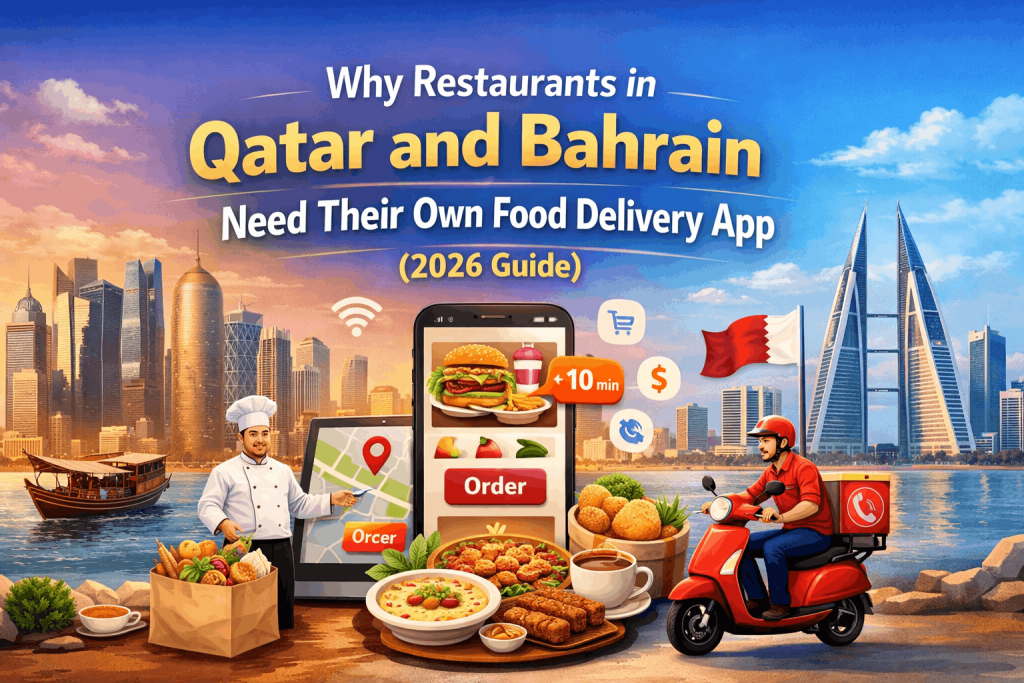
The food delivery market in Qatar, Bahrain, and the wider GCC is booming. Platforms like aggregators have made it easier for customers to order food—but for restaurants, they often come at a cost.
Today, more restaurants are shifting toward their own food delivery apps to gain control, increase profits, and build long-term customer relationships.
The Growing Food Delivery Market in the GCC
The Middle East food delivery market is expanding rapidly due to:
-
High smartphone penetration
-
Busy urban lifestyles
-
Rise of cloud kitchens
-
Digital-first consumers
In countries like Qatar and Bahrain, online food ordering is no longer optional—it’s expected.
The Problem with Aggregator Platforms
While platforms like Talabat, Deliveroo, and others bring visibility, they also come with major drawbacks:
High Commission Fees
Restaurants often pay 20%–35% per order, cutting deeply into profits.
No Customer Ownership
You don’t own customer data—aggregators do.
Limited Branding
Your restaurant is just one among hundreds on the platform.
Price Competition
Customers compare prices instantly, forcing discounts.
Over time, this reduces both profit margins and brand loyalty.
Why Your Own Food Delivery App is a Game-Changer
1. Higher Profit Margins
With your own app, you eliminate third-party commissions and retain full revenue.
2. Full Control Over Customer Data
-
Track customer preferences
-
Build loyalty programs
-
Run targeted promotions
This data becomes your biggest business asset.
Direct Customer Experience & Branding
Your app allows you to:
-
Create a unique brand experience
-
Offer personalized deals
-
Send push notifications
-
Build direct relationships
Customers remember your brand, not the aggregator.
3. Better Customer Retention
Instead of one-time orders, your app helps you:
-
Build loyalty programs
-
Offer exclusive discounts
-
Provide faster service
Result: Repeat customers = predictable revenue
4. Operational Efficiency
With your own system, you can:
-
Manage orders in real-time
-
Integrate POS systems
-
Control delivery logistics
This reduces errors and improves service quality.
5. Competitive Advantage in Qatar & Bahrain
In competitive markets like:
-
Doha (Qatar)
-
Manama (Bahrain)
Restaurants with their own apps:
-
Stand out from competitors
-
Build stronger local brand presence
-
Reduce dependency on third-party platforms
| Feature | Aggregators | Own App |
|---|---|---|
| Commission | High (20–35%) | Zero |
| Customer Data | Not owned | Fully owned |
| Branding | Limited | Full control |
| Profit Margin | Low | High |
| Customer Loyalty | Weak | Strong |
Future Trends in GCC Food Delivery
-
Rise of cloud kitchens
-
AI-based recommendations
-
Hyperlocal delivery models
-
Subscription-based food services
Restaurants with their own apps will be better positioned to adapt and scale.
Conclusion
For restaurants in Qatar and Bahrain, relying only on aggregators is no longer sustainable.
Owning a food delivery app means:
-
Higher profits
-
Stronger customer relationships
-
Long-term brand growth
The future belongs to restaurants that own their digital presence—not rent it.