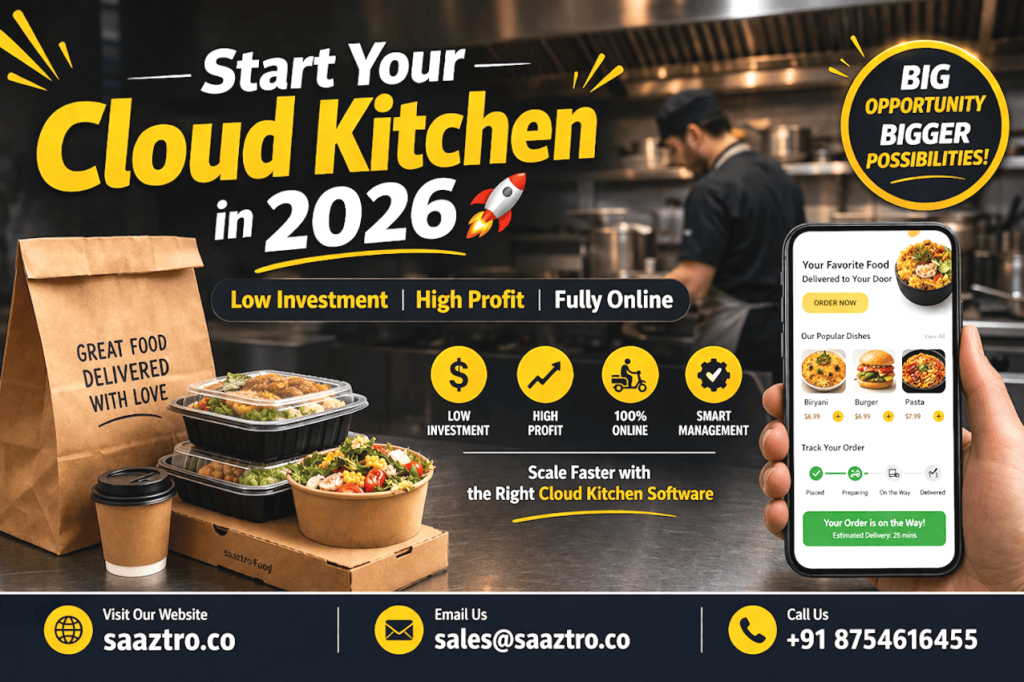
The food industry is evolving fast, and cloud kitchens are leading the transformation. With low investment, no dine-in costs, and high online demand, starting a cloud kitchen in 2026 is one of the smartest business moves.
In this guide, you’ll learn step-by-step how to start a cloud kitchen, along with the importance of choosing the right cloud kitchen software to scale your business.
What is a Cloud Kitchen?
A cloud kitchen (also called a ghost kitchen or virtual kitchen) is a delivery-only restaurant that operates without a physical dining space.
Customers order through apps like:
- Swiggy
- Zomato
- Your own website/app
Why Start a Cloud Kitchen in 2026?
Here’s why this model is booming:
Key Benefits
- Low startup cost compared to restaurants
- No need for prime location
- High scalability (multiple brands from one kitchen)
- Growing online food delivery demand
- Easier to automate with cloud kitchen software
Step-by-Step Guide to Start a Cloud Kitchen
1. Choose Your Niche & Concept
Decide what you want to sell:
- Fast food
- Healthy meals
- Biryani brand
- Multi-brand kitchen
Tip: Focus on high-demand, repeat-order items
2. Create a Business Plan
Your plan should include:
- Target audience
- Pricing strategy
- Cost estimation
- Delivery strategy
3. Get Licenses & Registrations (India)
You’ll need:
- FSSAI License
- GST Registration
- Local municipal approvals
4. Set Up Your Kitchen
Options:
- Rent a small kitchen space
- Shared kitchen model
- Home-based (if allowed locally)
5. Partner with Delivery Platforms
Register your business on:
- Swiggy
- Zomato
These platforms bring initial traffic.
6. Build Your Own Ordering System
Relying only on marketplaces is risky due to high commissions (20–30%).
This is where cloud kitchen software becomes essential.
Use a solution like Saaztro Cloud Kitchen Software
Why You Need Cloud Kitchen Software
A professional system helps you:
Core Features
- Online ordering website & mobile apps
- Order management dashboard
- Kitchen display system (KDS)
- Delivery tracking
- Payment integration
- Multi-branch management
Benefits of Using Cloud Kitchen Software
Increase Profit Margins
- Avoid third-party commissions
- Get direct orders
Scale Faster
- Run multiple brands
- Expand to multiple locations
Automation
- Auto order processing
- Real-time tracking
- Customer notifications
Cost to Start a Cloud Kitchen in 2026 (USD)
Based on recent industry data, cloud kitchen startup costs vary depending on your setup type.
1. Home-Based Cloud Kitchen (Low Budget)
- Estimated Cost: $1,200 – $3,500
Includes:
- Basic equipment
- Licenses
- Packaging & raw materials
- Initial marketing
This is the best option for beginners
2. Shared / Rented Kitchen
- Estimated Cost: $6,000 – $12,000
Includes:
- Kitchen rent
- Equipment upgrades
- Staff & operations
- Marketing
Ideal for scaling beyond home setup
3. Independent Cloud Kitchen (Full Setup)
- Estimated Cost: $15,000 – $25,000+
Includes:
- Full kitchen setup
- Branding & interiors
- Staff hiring
- Marketing & expansion
Suitable for serious long-term business
Quick Cost Comparison
| Setup Type | Cost (USD) |
|---|---|
| Home Kitchen | $1.2K – $3.5K |
| Shared Kitchen | $6K – $12K |
| Full Kitchen | $15K – $25K+ |
Software Cost (Important)
- Basic software / SaaS: $20 – $200/month
- Custom / full platform: $20,000+ (if built from scratch)
Using ready solutions like Saaztro Cloud Kitchen Software helps you avoid high development costs
Marketing Strategies for Cloud Kitchens
To succeed, focus on:
Digital Marketing
- Instagram & Facebook ads
- Google Ads
- Influencer promotions
Platform Optimization
- High-quality food photos
- Good ratings & reviews
- Fast delivery
Retention Strategy
- Offers & discounts
- Loyalty programs
- WhatsApp marketing
Common Mistakes to Avoid
- Relying only on Swiggy/Zomato
- Poor menu design
- Ignoring branding
- No proper software system
- Bad delivery experience
Future of Cloud Kitchens
By 2026 and beyond:
- AI-based demand prediction
- Hyperlocal delivery models
- More direct ordering systems
- Automation-driven kitchens
Final Thoughts
Starting a cloud kitchen in 2026 is a low-risk, high-growth opportunity—but success depends on how well you manage operations and customer experience.
The smartest move? Invest early in the right cloud kitchen software to automate, scale, and maximize profits.
Ready to Launch Your Cloud Kitchen?
Start with Saaztro Cloud Kitchen Software
Build your own branded ordering system, reduce commissions, and grow faster.